The ESI framework has been handed over to the Indonesian Government, laying the groundwork for greater investment in energy efficiency among small and medium-sized enterprises.
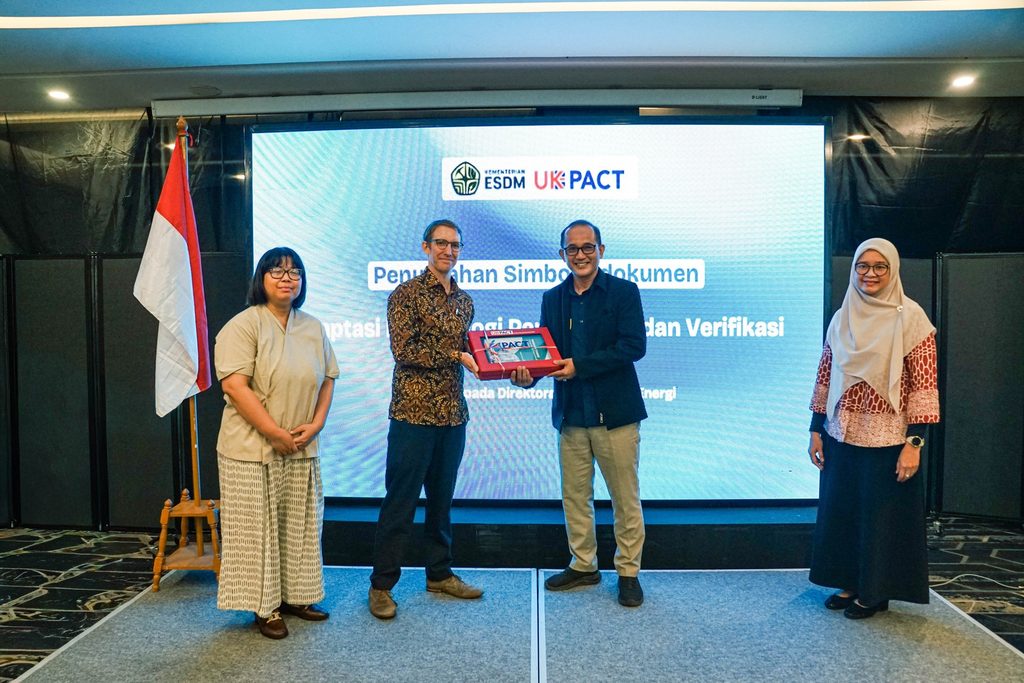
After 1.5 years of implementation, BASE is concluding its involvement with the Energy Savings Insurance (ESI) in Indonesia after successfully building the enabling environment for the model in the country. The implementation of ESI aims to contribute to closing the financing gap for energy efficiency upgrades among small and medium-sized enterprises (SMEs). On Wednesday 21st October 2026, BASE formally handed over the ESI framework and its tools to local authorities at an event in Jakarta, marking an important step toward enabling the future adoption and implementation of the ESI model in Indonesia.
From this point forward, Indonesia’s Directorate General of New, Renewable Energy and Energy Conservation (EBTKE) will advance ESI implementation in Indonesia, promoting the model among banks, insurance companies, energy efficiency system providers, and local SMEs, the model’s intended beneficiaries. A key step remains before the first ESI policies can be issued: formal endorsement by the Financial Services Authority (OJK) of the ESI insurance product and the surety bond mechanism that underpins it. This process is ongoing, and pilot projects already structured under the model are positioned to draw on the cover as soon as it is in place.
Initially developed by BASE Foundation and the Inter-American Development Bank (IDB) in 2015, ESI provides a guarantee on energy savings in the context of energy efficiency retrofits by SMEs, helping to mitigate performance risks and build confidence in investments in energy-efficient appliances.
In Indonesia, the implementation took place from April 2025 to September 2026, coordinated by BASE and the ASEAN Centre for Energy (ACE), with support from UK PACT (Partnering for Accelerated Climate Transitions) to advance the country’s decarbonisation efforts.
Addressing barriers to energy efficiency investment
Small-scale industrial operations accounted for around 33 per cent of Indonesia’s total industrial carbon emissions in 2022, according to research by the Institute for Essential Services Reform (IESR). Yet high upfront costs and uncertainty about future energy savings keep many Indonesian SMEs from investing in more efficient equipment. The ESI model was designed to address both, by building confidence in equipment performance while also improving access to finance.
To identify where the model could have the greatest impact, an initial market assessment by BASE and ACE covered more than 871,000 energy-intensive SMEs across four commercial and industrial sectors. It identified healthcare, commercial buildings and hospitality as priority areas, considering energy intensity, opportunities to replicate projects and data availability.
For a hotel considering replacing an ageing chiller, for example, lower electricity bills may make the investment attractive, but uncertainty about whether the promised savings will materialise can delay the decision. Under ESI, the technology provider guarantees the savings, supported by independent technical validation. If the guaranteed savings are not achieved, the provider is responsible for compensating the client for the shortfall. An insurance policy backs this commitment, providing additional protection and helping build confidence in the investment.
Establishing the core components of the ESI model
ESI combines four complementary components which form the model’s implementation framework:
a) The insurance product—a surety bond—backs the technology provider’s energy savings guarantee.
b) A standardised and simplified contract, defines the technology provider’s energy savings commitment and how those savings are measured, validated, guaranteed and insured. The template provides a clear framework for negotiations and facilitates uptake of the model.
c) An independent technical validation, carried out by a credible third party to assess projected energy savings, verify the installation and provide a technical opinion in cases of disagreement between the parties.
d) Access to finance, through existing instruments such as green loans or new financing products. The project engaged banks to develop financing options that take account of the guaranteed energy savings and associated reduction in performance risk. More favourable lending terms remain a potential benefit, subject to each bank’s assessment of the borrower and project.
Together, these components can give a hotel greater confidence to invest in a more efficient cooling system. The resulting energy savings can help cover loan repayments and improve the investment’s financial viability.
The project worked to establish and adapt this framework in Indonesia by developing the tools and engaging the institutions needed to put it into practice.
Building the foundations for ESI in Indonesia
From April 2025 to September 2026, BASE and its local partners developed the tools, institutional relationships and capacity needed to introduce ESI in Indonesia. The work brought together banks, insurers, technology providers and an independent validation entity to give businesses and lenders greater confidence that energy efficiency investments will deliver the promised savings.
Over the course of 1.5 years, the BASE team and its local partners engaged three major Indonesian banks and three insurance companies: Bank Syariah Indonesia (BSI), Bank Mandiri, and SMBC Indonesia, alongside insurers Asuransi Sinar Mas, Asuransi Asei, and Jaminan Pembiayaan Askrindo Syariah.
All six institutions signed formal agreements under the programme, providing a formal basis for collaboration on ESI financing and insurance.. Engagement with banks included their risk and credit teams, bringing the model to the functions responsible for assessing projects and making lending decisions.
Bob T Ananta, Deputy Director at Bank Syariah Indonesia, said:
“Through the initiation of Energy Savings Insurance, we hope to support Indonesia in implementing a low-carbon economic transition and supporting the achievement of Indonesia’s Net Zero Emission target by 2060. This commitment marks the company’s consistency in implementing ESG aspects in its business operations and providing a real impact on sustainable financing.”
Working with BASE, Asuransi Sinar Mas developed an insurance product using a surety bond to back the technology provider’s energy savings guarantee. The product is now under review by OJK, and policies can be issued once that review is complete. Asuransi Asei and Askrindo Syariah also participated in developing the institutional foundations for an ESI insurance market.
The project developed a standardised energy performance contract adapted to Indonesian law and a validation toolkit covering ten technologies, with methodologies and forms available in English and Bahasa Indonesia. Cleared for publication by EBTKE, these tools provide a common basis for defining savings commitments, measuring performance and determining whether guaranteed savings have been achieved.
BBSP KEBTKE, a technical unit under the Ministry of Energy and Mineral Resources, took on the independent validation role and received its first validation request. Its role covers assessment of project proposals, verification of installations and annual performance validation, together with technical determinations where disagreements arise over equipment performance.
Alongside these tools and partnerships, the project delivered training, technical workshops, consultations and matchmaking activities. The results framework reports that technical assistance reached 584 individuals and 140 organisations during implementation. Activities addressed ESI’s contractual, insurance and validation arrangements, with dedicated sessions on gender equality and inclusive finance.
To help translate these foundations into practical implementation, BASE signed three transitional memoranda of understanding in October 2026 with the technology providers developing the pilot projects: PT Investasi Hijau Dua, PT Powerbrain Automasi Energi and PT Cakrawala Energy Gemilang. Together, these projects represent ~USD 1.05 million in investment, they are expected to avoid over 2,100 tonnes of CO₂e annually once operational. The projects range from air-conditioning retrofits in educational and training facilities to large-scale chiller replacements in commercial office buildings and shopping centers.
Signed after the funded implementation period ended, the agreements provide a framework for limited technical, legal and validation support from BASE, with local coordination by ACE, until September 2027. They aim to help the projects progress towards completed ESI transactions.
Together, efforts under the programme have established a common contractual and technical framework for guaranteeing energy savings, along with the relationships needed to apply it. A key lesson is that introducing ESI requires coordinated preparation across institutions, followed by sustained support for the first transactions. The framework can reduce uncertainty about equipment performance, while access to finance also depends on lenders’ assessment of borrowers and projects. At project closure, no insured ESI transaction had been completed and participating banks had not yet adapted their credit appraisal practices. The immediate priorities are therefore to complete the regulatory review, agree validation fees and service arrangements, and support the initial projects through contracting, validation and insurance issuance. Completing these steps would provide practical evidence of how ESI can help overcome the investment barriers facing Indonesian businesses.
ESI deployment leadership officially transferred to the Indonesian authorities
Handover ceremony
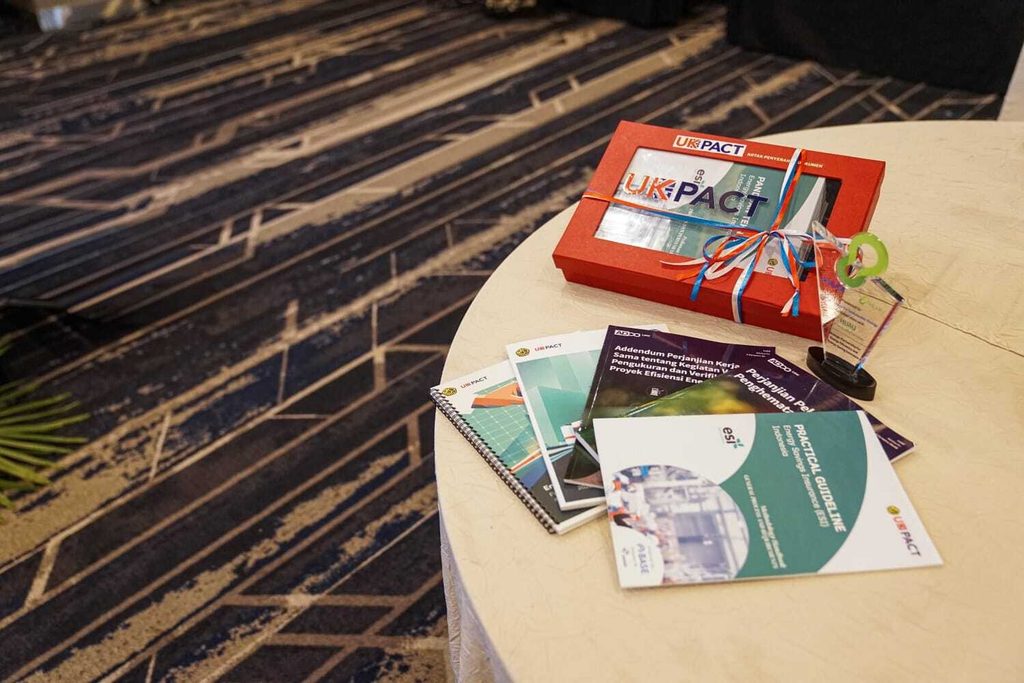
After a successful deployment in Mongolia, Europe, and Latin America, this new ESI implementation in Indonesia will empower SMEs, including women-led enterprises, to contribute meaningfully to the Net Zero Emission (NZE) 2060 target from the Government of Indonesia by accelerating the adoption of cleaner energy equipment, also unlocking lower utility bills, emissions reductions, and sustainable economic growth.
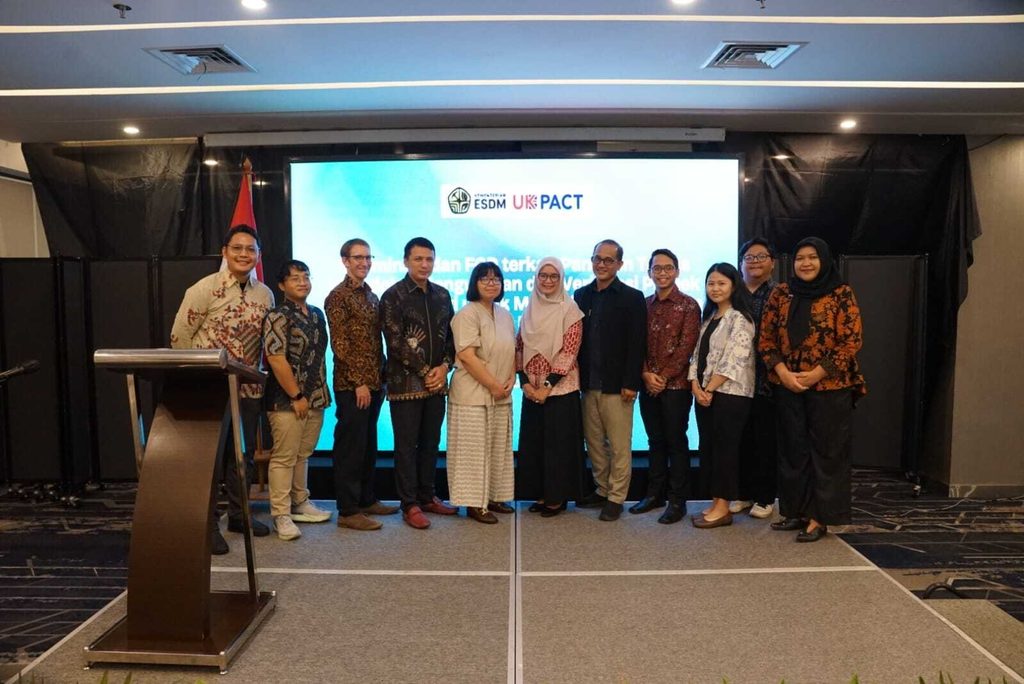
The model was formally handed over to EBTKE in October 2026, as part of a ceremony that brought high-level dialogue with Indonesian government representatives and project partners. This launch follows comprehensive efforts from BASE and UK PACT to build the case for insurance-based de-risking for energy efficiency and cultivate the financial sector’s interest in such models.
Daniel Magallon, Managing Director at BASE Foundation, said
“The official launch of ESI Indonesia follows a clear idea: market-based solutions are the key to unlocking sustainable investment. ESI is a practical, proven de-risking tool essential to strengthening Indonesia’s climate and energy transition ecosystem. Crucially, by addressing the persistent challenge of perceived performance risk, ESI will directly accelerate the adoption of energy-efficient technologies among Indonesian SMEs, driving both economic growth and decarbonisation.”
Earlier this year, the model was presented at a two-day event in Jakarta on 19-20 May, jointly coordinated by NIRAS and BASE, which notably featured a technical workshop introducing insurance company representatives and industrial companies to the ESI product and its assessment tools. Capacity-building sessions and matchmaking events were also held, bringing together industrial companies, insurers, and partner banks to lay the groundwork for the formal relationships now in place.
New website launched
The newly launched ESI Indonesia website (esi-indonesia.id) serves as the public face of the Energy Savings Insurance (ESI) program in Indonesia. It provides a clear overview of the ESI framework and explains its key benefits for the different stakeholders involved.
Designed as a comprehensive resource hub, the website also serves as a central point of access to information and essential project documentation. Its “Resources” page brings together key documents developed throughout the project, giving small businesses, financial institutions, insurance partners, and technology suppliers direct access to standardised contracts, guidelines, methodologies, and technical validation and verification materials.
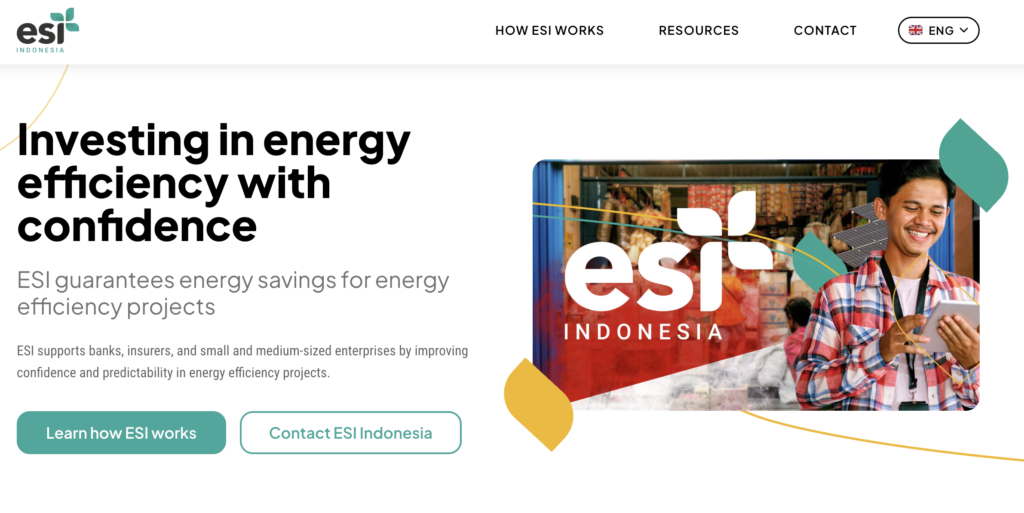
Beyond explaining the ESI model in English and Bahasa Indonesia and providing a central library of essential resources, the website aims to build trust and generate interest among SMEs, banks, insurers and technology providers. It also offers a direct point of contact with the project team, enabling interested stakeholders to learn more and explore how they can engage with the model.
Adopt ESI!
With early pipeline development underway and final regulatory approvals imminent – with an initial focus on energy efficiency upgrades in commercial and office buildings – additional banks, insurers and other market participants are invited to engage with the initiative and explore opportunities to contribute to the development of Indonesia’s ESI market.
More information and all necessary documents can be accessed on the official website: https://esi-indonesia.id/
If interested in learning more, contact us!


